This network publication/presentation recognizes people and places, products and services, businesses, and events. What may affect our lives today prepares us for a better tomorrow. We take notice.
Po'boycorp! is a subsidiary of Po'boy Distribution & Holdings
Richard D. Lewisprovides a truly global and practical guide to working and communicating
across cultures, explaining how our own culture and language affect the
ways in which we organize our world, think, feel and respond, before
going on to suggest both general and specific ways of making our
influence felt across the cultural divide.
There are penetrating insights into how different business cultures
accord status, structure their organizations and view the role of the
leader, alongside invaluable advice on global negotiation, sales and
marketing. The book ranges from differences in etiquette and body
language to new thinking in the area of international management and
team-building in Europe and the USA, as well as covering challenging new
geographical ground in Russia, China and the Far East.
By focusing on the cultural roots of national behavior, both in society
and business, we can foresee and calculate with a surprising degree of
accuracy how others will react and respond to us. Lewis adds the often
overlooked dimension of language – for example, how Japanese often react
in a certain way because they are thinking in Japanese.
When Cultures Collide gives
you a greater understanding of what makes other people tick and enables
managers to ensure that their policies and activities exploit cultural
synergies and make the right appeal to their chosen market.
"An authoritative roadmap to navigating the world's economy." The Wall Street Journal
RDL: "A working knowledge of the basic
traits of other cultures (as well as our own) will minimize unpleasant
surprises (culture shock), give us insights in advance, and enable us to
interact successfully with nationalities with whom we previously had
difficulty." Business Insider:How To Do Business Around The World.
Showcase Your Inner Awesome: Understanding people is the most important life skill a person can have.
Yet, we are not taught people skills in school. Nor do our parents sit
us down and teach us how to interact effectively. If you want to win the deal, get the date, negotiate the sale or influence others you have to understand the science of people.
SoP: You can’t succeed in business, life or love without mastering people skills.
“A Snapchat what?”
An
original promise of social media was that it mimicked real life. Sites
like Facebook, Twitter and Instagram offered places to capture and share
your memories, but after using them for several years, I feel like
someone who was sold a lemon by a used-car salesman.
These
social media sites have become a highly edited, cropped and filtered
version of real life. And the fact that they promise perpetuity only
makes them worse.
But there’s a social media tool that, while it’s been around a while, I’ve recently become borderline obsessed with: Snapchat Stories.
Readers under 14 can skip the next couple of ex-plainer paragraphs. The
rest of you are probably asking yourself, “A Snapchat what?”
Snapchat Stories can either be private, only viewable by your friends,
or public and seen by anyone. But unlike other social video services,
and here’s the best part, Snapchat Stories last 24 hours and then —
poof! — they’re gone. Full ArticleBy NICK BILTON via NYT.
Jeff Boss: My dad always used to tell me that the difference between the “you” now and the “you” 20 years from now will be the places you visit and the people you meet. I would also add baldness and gray hair to that, but they don’t sound as cool.
He was right. Whether you meet someone in person or read a book he or she authors, people are pivot points that enable learning and foster personal growth for others. 8 Books Every Entrepreneur Should Read in 2015 .
Mathew Carpenter is desperately tired of his product: "Hi guys, I'm the founder of this website. Please stop
buying this horrible glitter product — I'm sick of dealing with it.
Sincerely, Mat." Is Begging People To Stop Using His Service.
“Leaders don't force people to follow— they invite them on a journey. ”
— Charles S. Lauer .
Poboycorp: An Online Network Presentation/Publications.
"Renewal is not for slackers; renewal is a way to increase your capacity, to be more effective."
InThrive, Arianna Huffington makes an impassioned and compelling case.
The Third Metric; When you stop … if you ever do…you sense something isn’t quite right. You have a long list of accomplishments that bring great satisfaction –
deals, causes, and outcomes that are better because you poured your
heart into them. Yet you’ve been giving and giving to every other good
endeavor but yourself. You’re depleted. There’s no rest. There’s no
respite. There’s no end. It doesn’t have to be that way. You CAN
redefine your life to include a Third Metric -- your well-being, wisdom,
wonder, and giving. Thrive invites readers to hit a pause button in their stressful race for
job advancement to enable them to focus on health, wellbeing, giving
back, and personal fulfillment. A stress-reducing tool for real people.
Arianna Huffington's personal wake-up call came in the form of a broken
cheekbone and a nasty gash over her eye — the result of a fall brought
on by exhaustion and lack of sleep. As the cofounder and editor-in-chief
of the Huffington Post Media Group — one of the fastest growing media
companies in the world — celebrated as one of the world's most
influential women, and gracing the covers of magazines, she was, by any
traditional measure, extraordinarily successful. Yet as she found
herself going from brain MRI to CAT scan to echocardiogram, to find out
if there was any underlying medical problem beyond exhaustion, she
wondered is this really what success feels like?
As more and more people are coming to realize, there is far more to
living a truly successful life than just earning a bigger salary and
capturing a corner office. Our relentless pursuit of the two traditional
metrics of success — money and power — has led to an epidemic of
burnout and stress-related illnesses, and an erosion in the quality of
our relationships, family life, and, ironically, our careers. In being
connected to the world 24/7, we're losing our connection to what truly
matters. Our current definition of success is, as Thrive shows, literally killing us. We need a new way forward.
In a commencement address Arianna gave at Smith College in the spring of
2013, she likened our drive for money and power to two legs of a
three-legged stool. They may hold us up temporarily, but sooner or later
we're going to topple over. We need a third leg — a third metric for
defining success — to truly thrive. That third metric, she writes in Thrive,
includes our well-being, our ability to draw on our intuition and inner
wisdom, our sense of wonder, and our capacity for compassion and
giving. As Arianna points out, our eulogies celebrate our lives very
differently from the way society defines success. They don't commemorate
our long hours in the office, our promotions, or our sterling
PowerPoint presentations as we relentlessly raced to climb up the career
ladder. They are not about our resumes — they are about cherished
memories, shared adventures, small kindnesses and acts of generosity,
lifelong passions, and the things that made us laugh.
In this deeply personal book, Arianna talks candidly about her own
challenges with managing time and prioritizing the demands of a career
and raising two daughters — of juggling business deadlines and family
crises, a harried dance that led to her collapse and to her "aha
moment." Drawing on the latest groundbreaking research and scientific
findings in the fields of psychology, sports, sleep, and physiology that
show the profound and transformative effects of meditation,
mindfulness, unplugging, and giving, Arianna shows us the way to a
revolution in our culture, our thinking, our workplace, and our lives.
"Media mogul Huffington lays out steps to creating a lifestyle where
success is measured not by money and power, but something more
meaningful." Thrive is one of The Season’s Best Business Books:
From sobering reflections on the Great Recession, to an exposé of shady
Wall Street practices, to inspirational advice from self-made leaders,
this season’s best business books offer something for every reader
looking for insight into how money works and how to make more of it. Posted by Joel Cunningham
As You Age, Will Social Media Make You Happier or Lonelier? The life of a retired senior can be a quiet one, with family and friends spread far and wide. But gaining mastery of the digital world at this later stage in life can mean the difference between suffering in isolation and leading the life of a (virtual) social butterfly.
Over the last two years, several studies have shown that seniors engaged with technology and connected through social media tend to have higher self esteem and are less likely to fall into depression, especially those living alone or in a retirement home. Read Article: 'Why You’re Never Too Old to Use Social Media' Content Sponsored via #PrudentialBYC
Introspective writing: does it keeps people alive and well? "This is not a replacement for people or human contact."
Poboycorp: An Online Network Presentation/Publications.
In the Information Age, data overload can be downright suffocating. Each
day, average Americans are bombarded by the equivalent of 174
newspapers of data; five times as much information as we processed daily
in the mid-eighties. The book by neuroscientist Daniel J. Levitan
(This is Your Brain on Music) schools readers on cutting-edge brain
science that can help them hold the reins even under the constant
onslaught of information. By combining fascinating facts with practical
pointers, The Organized Mind keeps your attention even as it teaches you
to manage your life-and remember when to pick up the kids.
“information overload.”
It reminds us of tweets, texts, emails, the endless stream of
interesting articles on Facebook, those viral videos we can’t help but
click on, the numerous phone photos and videos we take, Secret posts,
fleeting Snapchat photos and more.
But actually the cognitive flood can be even simpler than that. By one calculation, we’ve created more information in the last 10 years than in all of human history before that.
All of this is more information than the brain is configured to handle.
The conscious mind can pay attention to three, maybe four, things at
once.
Considering that Americans took in five times as much information every
day in 2011 as they did in 1986, we have to make a conscious effort to
beat back the flood. Here are Levitin’s top 10 tips for thinking straight, overcoming procrastination and putting in less time but
getting more done. Source: Forbes Contributor Laura Shin
The information age is drowning us
with an unprecedented deluge of data. At the same time, we’re expected
to make more—and faster—decisions about our lives than ever before. No
wonder, then, that the average American reports frequently losing car
keys or reading glasses, missing appointments, and feeling worn out by
the effort required just to keep up.
But somehow some people become quite accomplished at managing information flow. In The Organized Mind,
Daniel J. Levitin, PhD, uses the latest brain science to demonstrate
how those people excel—and how readers can use their methods to regain a
sense of mastery over the way they organize their homes, workplaces,
and time.
With lively, entertaining chapters
on everything from the kitchen junk drawer to health care to executive
office workflow, Levitin reveals how new research into the cognitive
neuroscience of attention and memory can be applied to the challenges of
our daily lives. This Is Your Brain on Music showed how to better play and appreciate music through an understanding of how the brain works. The Organized Mind shows how to navigate the churning flood of information in the twenty-first century with the same neuroscientific perspective.
DANIEL J. LEVITIN, PhD, is
the James McGill Professor of psychology and behavioral neuroscience at
McGill University—where he also teaches in the graduate school of
business—and dean of the College of Arts and Humanities at the Minerva
Schools at KGI. The author of two New York Times bestselling books, This Is Your Brain on Music and The World in Six Songs, he splits his time between Montreal and Orinda, California.
DJL holds the
Bell Chair in the Psychology of Electronic Communication. Before
becoming a neuroscientist, he worked as a session musician, sound
engineer and record producer. He has written extensively both in
scientific journals and music trade magazines such as Grammy and Billboard.
“Lost your keys or glasses? Blame your brain.”
Critics of every expansion of information access (writing,
printing press, TV, Internet, social media) warn that the information
expansion has gone too far and will make us stupid.
While disagreeing,
Levitin admits that brains evolved to focus on one thing at a time and
filter out distractions, but this “attentional system” is outdated when
confronted with today’s avalanche of input. Memory is also unreliable;
worse, we often refuse to believe it. Most Americans, President George
W. Bush included, remember watching TV on 9/11 and seeing two planes
striking the WTC towers 20 minutes apart.
This is a false
memory, however; videos of the first plane didn’t appear until the
following day. Levitin fills a third of his book with insights derived
from neuroscience. In the remainder, he delivers advice for organizing
your life by “shifting the burden from neurons to the outside world.”He
provides imaginative suggestions involving filing systems, labels and
multiple computers, as well as tactics to determine the usefulness
(i.e., truth) of the excess of information in today’s media.A prolific
genre of books covers this subject, but Levitin holds his own, and his
examination of brain function stands out.
— Kirkus Reviews
“Until 1600, the typical European home had a single room, and families
would crowd around the fire most of the year to keep warm.”― DJL
Thanks for Visiting!
Poboycorp; An Online Network Presentation/Publications
"We want Google," said one of its founders, "to be the third half of
your brain." Over the past decade,
two of the prime movers in achieving
that goal were ex-CEO Eric Schmidt and former SVP of Products Jonathan
Rosenberg, the authors of this book. In this page-turner, mind-elevating
primer, they answer the question that beckons every entrepreneur
dreamer: How do you make a $60 billion corporate giant thrive—and
expand? Their responses are no pie-in-the-sky generalizations. They
write with pertinent specificity about matters that concern every
business owner and, every manager: corporate culture, decision-making,
communication, innovation, talent-finding, and encouraging employee
creativity.
In an era when everything is speeding up, the best way for businesses to
succeed is to attract smart-creative people and give them an
environment where they can thrive at scale. HOW GOOGLE WORKS explains
how to do just that.
Google Executive Chairman and
ex-CEO Eric Schmidt and former SVP of Products Jonathan Rosenberg came
to Google over a decade ago as proven technology executives. At the
time, the company was already well-known for doing things differently,
reflecting the visionary—and frequently contrarian—principles of
founders Larry Page and Sergey Brin. If Eric and Jonathan were going to
succeed, they realized they would have to relearn everything they
thought they knew about management and business.
In a new book, “How Google Works,” Schmidt and Jonathan Rosenberg,
the company’s former vice president of products, describe how the
company steers its workforce, offering their experience as a guide to
managing the most prized resources in tech:
engineers and “smart
creatives.”Both executives started at the company more than a decade ago when it
was a much smaller place; today it has roughly 50,000 employees.
In a recent interview with At Work, the co-authors discussed their
management strategies, their go-to interview questions—and how
BlackBerries became the flash point for one of the most contentious
debates in the company’s history.
Today, Google is a global icon
that regularly pushes the boundaries of innovation in a variety of
fields. HOW GOOGLE WORKS is an entertaining, page-turning primer
containing lessons that Eric and Jonathan learned as they helped build
the company. The authors explain how technology has shifted the balance
of power from companies to consumers, and that the only way to succeed
in this ever-changing landscape is to create superior products and
attract a new breed of multifaceted employees whom Eric and Jonathan dub
"smart creatives."
Covering topics including corporate culture,
strategy, talent, decision-making, communication, innovation, and
dealing with disruption, the authors illustrate management maxims
("Consensus requires dissension," "Exile knaves but fight for divas,"
"Think 10X, not 10%") with numerous insider anecdotes from Google's
history, many of which are shared here for the first time.
Written by insiders from page one, the stories, whether
about the early days at Google or the company's unusual, occasionally
outrageous, but brilliant business practices, are irresistible. Turn off your phone, lock the door, and settle down for an entertaining
and educational book about the company everyone wonders about.
In interview, Schmidt And Rosenberg talk about how consumers have more
power than ever before, how Google made them rethink how companies can
be built, the importance of attracting the best people, what the
attributes of a strong corporate culture are, and how to create
disruption in any industry. Full Article by Dan Schawbel.
"One mistake companies make when it comes to disruption is to believe it won’t happen to them."
Where's Google Next?
Onstage at TED2014, Charlie Rose interviews Google CEO Larry Page about
his far-off vision for the company. It includes aerial bikeways and
internet balloons ... and then it gets even more interesting, as Page
talks through the company's recent acquisition of Deep Mind, an AI that
is learning surprising things.
Charlie Rose: When I close conversations with lots of people,I always ask this question:What state of mind,what quality of mind is itthat has served you best?People like Rupert Murdoch have said curiosity,and other people in the media have said that.Bill Gates and Warren Buffett have said focus.What quality of mind,as I leave this audience,has enabled you to think about the futureand at the same timechange the present?
Larry Page: You know, I think the most important thing --I looked at lots of companiesand why I thought they don't succeed over time.We've had a more rapid turnover of companies.And I said, what did they fundamentally do wrong?What did those companies all do wrong?And usually it's just that they missed the future.And so I think, for me,I just try to focus on that and say,what is that future really going to beand how do we create it,and how do we cause our organization,to really focus on thatand drive that at a really high rate?And so that's been curiosity,it's been looking at thingspeople might not think about,working on things that no one else is working on,because that's where the additionality really is,and be willing to do that,to take that risk.
An Online Network Presentation/Publications ATM fees surge again It's more expensive than ever to get your hands on your own money. People are getting smarter about the money problem. This ATM is quite smart, it may surprise you.
JANET KESTIN and NANCY VONK spent
thirteen years as co-chief creative officers of Ogilvy & Mather
Toronto. They delivered world-beating results for global brands like
Unilever and Kraft, including Cannes Grand Prix-winning work for Dove's
Campaign for Real Beauty and a Grand Clio for "Diamond Shreddies." They
are the authors of Pick Me, the ad industry advice column "Ask Jancy"
and frequent contributors to several publications, including Fast
Company. In 2012, they were named among Ad Age's 100 Most Influential
Women in Advertising. Now with Swim, their new creative leadership lab,
they approach leadership training a little differently. Well, a lot
differently.
In their book, "Darling You Can't Do Both: And Other Noise to Ignore on Your Way Up," the creatives behind real beauty at Ogilvy & Mather, Janet Kestin and Nancy Vonk, trace the campaign's roots while making a compelling argument for why it's time to rethink the way women work.
JANET KESTIN and NANCY VONK / CREDIT: HARPER COLLINS
In the early 1990s, as a newly minted creative team, we managed to incur
the disdain of the advertising establishment right out of the gate when
we shattered some time-honored rules in creating a campaign called
"Dove Litmus Test." It proved to be pioneering. Not only did we help
sell a stupid amount of soap, but "Litmus" paved the way for Dove's
Campaign for Real Beauty, which reached millions of people and sparked a
global debate about our culture's warped definition of beauty. For us,
it ignited a personal interest in looking much more closely at what
women are up against at home and at work. Read Full Article
Meet the dynamic duo behind the original Dove Real Beauty Campaign. They'll
name the 17 rules covered in their upcoming book and explore in detail
the two must-break rules most relevant to women in advertising.
“You guys have broken every rule of business
success, and that's a book!”
Janet Kestin
and Nancy Vonk have built their careers on unconventional creative
thinking. As the team behind Dove’s Evolution video, they famously
stripped away the photoshopping, lighting and make-up to sell real
beauty.
But after years of winning awards for rethinking brands, they
realized that they wanted to spend more of their time rethinking the way
we work-or, in many cases and places, the way our work doesn’t work for
us, and especially for women. And so they tackled the problem in their
hallmark style-by turning expectations upside down and shaking them.
Soundly.
Darling, You Can’t Do Both, is a
smart, relatable guide for all of the women who embraced the spirit of
Lean In but were left wondering where to start-how could they, in all
industries and at all levels, really start to change the institutions
they work in from the ground up.
Janet Kestin and Nancy Vonk’s answer is
that women need to start breaking rules they’ve always tacitly
accepted, and start understanding how being a woman in business is an
asset, not a liability. They argue that motherhood creates better
leaders, that you should be letting the intern help solve your biggest
problems and that networking isn’t just the icky business of golf clubs
and business cards. Darling will spark a new thread of conversation
about women in the workplace-one that isn’t about accepting defeat or
blaming ourselves, but is instead about moving (and looking) forward.
Critical Praise for Darling, You Can't Do Both
"A guide to breaking the rules that stunt careers and wreak havoc at home. The how-to follow-up to Lean In."— Alan Webber, co-founder, Fast Company
Po'boy! An Online Network Presentation/Publications:
In
South Florida, Ms. Graham-Campbell of Alikay Naturals recently made the
biggest announcement of her career to her nearly 100,000 YouTube
subscribers: Her line of organic hair creams, oils and conditioners for
black women, products she had cooked up in her kitchen, was hitting the
shelves of Target stores.
Ms.
Graham-Campbell, 27, started her business with $100 as a college
student, marketing her products on YouTube and selling them on Etsy. Now
her videos can draw as many as 200,000 views from fans. “They want to
know, who’s the face behind the brand?” she said. “Are you able to
relate to my hair, are you able to relate to my struggles and to my
journey of being natural?”
Most
of all, she said, she loves hearing from women who notice her photo on
Alikay bottles.
They tell her that they tell their children: “Someone
that looks like you makes that product.”
Full Article by NYT: Black Women Find a Growing Business Opportunity
Learn, Grow, Thrive:
When searching for a career coach, business consultant/trainer, or
pageant coach, your goal should be to find the most highly qualified
person; someone who has “been there, done that.” Career Woman, Inc. is a
Seattle-based career coaching and consulting agency founded by the #1
expert in women’s careers, Lisa Quast, a certified career coach, mentor,
business consultant, former Fortune 500 executive and award-winning
author and blogger.
Career Woman Inc. a top choice for women who strive to grow
professionally, maximize their job potential, resolve a workplace issue,
develop a new career path, or for any company that needs a business
consultant to help them develop their company or their talent. Lisa’s
expert and firsthand guidance followed by an actionable step-by-step
plan delivers proven results.
Lisa’s dedication to the advancement of women in business and the
achievement of women’s personal and professional aspirations led her to
found Career Woman, Inc. in 2005 to offer Career Coaching, Business
Consulting, and Pageant Coaching based on her own experiences.
Lisa’s unique approach and successful results have propelled her to
the forefront of issues related to women in the workplace. She is a
blogger for Forbes.com and The Seattle Times, a frequent contributor to
nationally published articles, and a sought-after speaker. Lisa is a
certified executive coach and has a top-rated female focused career
blog, winner of the 2012 and 2010 Stevie Awards for “Blog of the Year.”
Lisa is also the award-winning non-fiction author of the book, “Your
Career, Your Way!”
Your Career, Your Way is
the bookfor all woman who do not want to trust their career advancement
to luck. It is for women who want to take control of their career and
achieve their aspirations. Achieving success requires more than luck,
more than hard work - it requires a plan. Your Career, Your Way offers the roadmap to women's dreams by guiding them through the
creation and implementation of a personal strategic plan using
easy-to-follow, step-by-step instructions.
One of Lisa’s favorite quote: “There’s a
special place in hell for women who don’t help other women.” And 'loved' Article shared by Quast. It’s been called the “hardest word,” but some women seem to use this word as everything from a way to interject their thoughts into a
conversation to a way of prefacing any request for help. Career Chic, read and learn more about Lisa Quast.
Trusted friends can help you break the habit by quietly letting you know
when you’re using “sorry” inappropriately. Knowing that
you’re under another’s watchful eye is also going to make you more aware
of your speech. Sometimes, saying “sorry,” is easier than thinking about the word you
really want to say, or becomes a way of softening your words or opinion
before they’re even out of your mouth. If either is the
case, be more careful to choose the word or phrase you really mean to
say. Sometimes, instead of saying “sorry,” it’s best to not say anything at all. Full Articleby @gwenmoran via FastCompany.
Business consultant Kathryn D. Cramer, author of Lead Positive: What Highly Effective Leaders See, Say, and Do,
says women are socialized from an early age to focus on relationships
and nurturing. Any sign of strength can be off-putting, so they’re
conditioned to soften communication that can be construed as assertive
or aggressive. Apologizing before speaking--or in any situation where
women must show strength or where there is potential for conflict--is
one way of doing so.
"In Lead Positive, Cramer has
captured the secret to great leadership: the actions and words, based
on positive thinking and integrity, that bring out the best in everyone
around us. Instead of process and strategies, she shines the spotlight
on what we can do and say to engage and create a truly cohesive
workforce that is up to any challenge. Lead Positive is a
valuable, original contribution to leadership thinking and learning with
case studies that are original, on-point, and enlightening. Brilliant!"
—MARSHALL GOLDSMITH
Kathryn D. Cramer, PhD, is passionate about possibilities and potential.
She created and has dedicated her life to asset-based thinking (ABT), a
way of looking at the world that helps leaders, influencers, and their
teams make small shifts in thinking to produce extraordinary impact.
Po'boy! An Online Network Presentation/ Publications: “Either your company grows or it dies.” —The Secrets of Business Growth
“When we go in a new direction, our immediate reaction is to use our
memory and imagination to sabotage us, instead of serve us.We find all the reasons why this experience isn't a good idea or why
this idea won't work.”Entrepreneur Helps 500 Americans Overcome Recession
“For a lot of people, I was an example that you can go in a new direction and change the trajectory of your work and your life,”—Greg Hartle; 50 States in 1,000 Days:An inspiring journey across America.
You have the right Not to remain silent with the given Right to fight
back!
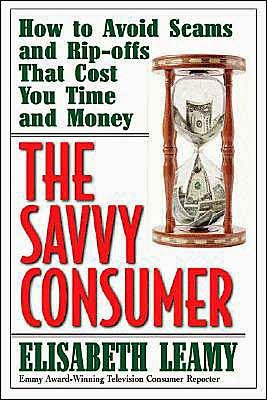
Learn how to spar with car salesmen and avoid paying crooked
mechanics. Savvy as you want to be; keep movers from holding your
belongings hostage, the rule book is on your side that makes debt
collectors go away. You’ll learn how to
make telemarketers stop calling and junk mail stop coming. Want to
find unclaimed money in your family’s name? Bid for exotic bargains at a
government auction? The Savvy Consumer shows you how to snag the deals
and sidestep the deceptions.
The name is Elisabeth Leamy, she gets to the point; hundreds of consumer calls on her tip line at the
Washington DC affiliate of Fox News. Consumers call in after losing
hundreds or thousands of dollars to car dealers, mechanics, contractors,
movers—you name it!
As an investigative reporter Elisabeth has delved
into all the scams and now puts what she has learned into this
invaluable resource. The Savvy Consumer shows readers how to spar with
car salesmen, how to avoid paying crooked mechanics, and ways to bargain
down closing costs when you buy a house. Elisabeth explains how to keep
a mover from holding your belongings hostage and what your rights are
if you’re a renter.
She reveals the single step that makes collection
agents go away and easy ways you can instantly improve your credit
score. Want to find unclaimed money? Bid for bargains at a government
auction? Want to make telemarketers stop calling and junk mail stop
coming? What are the most common scams and how can you avoid them? It’s
all in The Savvy Consumer, along with more than a hundred other topics.
Elisabeth educates readers by sharing anecdotes about real consumers and
their struggles. She explains the signs to look out for, the questions
to ask, how to do your homework, and where to complain. There are
hundreds of books about making money. This bookis about keeping your
hard-earned cash.
"Eli"explains howTo SAVE BIG, you don't want to miss this!
Now it's time to make money-saving moves that
actually matter. Elisabeth believes people are looking in the wrong
places --like the
bottoms of their latte cups-- in their search for savings. To SAVE BIG
we need to focus where we spend big, namely on Houses, Cars, Credit,
Groceries and Healthcare. SAVE BIG shows you quick, easy ways to save
tens of thousands of dollars in these key areas.
Elisabeth "Eli" Leamy is the Consumer Correspondent for ABC News' "Good
Morning America"
Leamy also contributes consumer stories to World News and
other ABC programs. Elisabeth has been nominated three times for Business and Financial
Reporting Emmys for stories on the internet underworld of identity theft
and also the going out business and gold buying investigations. Regionally, she has received 13 Emmy Awards and four
Edward R. Murrow Awards. Eli loves her beat because it's not theoretical.—
Her stories matter to people and their pocketbooks.
Po'boy! An Online Network Presentation/Publications:
“I have never understood the importance of having children memorize
battle dates. It seems like such a waste of mental energy. Instead, we
could teach them important subjects such as How the Mind Works, How to
Handle Finances, How to Invest Money for Financial Security, How to be a
Parent, How to Create Good Relationships, and How to Create and
Maintain Self-Esteem and Self-Worth. Can you imagine what a whole
generation of adults would be like if they had been taught these
subjects in school along with their regular curriculum?”― Louise L. Hay, You Can Heal Your Life
If you are about to send a child off to college or to a gap-year
program, you’re probably busy with last-minute shopping, packing and
worrying about roommates. Here’s one more thing you should do as you
prepare for the big separation: Two DocumentsEvery 18-Year-Old Should Sign.
Thoughts On The Business Of Life; 'Public relations, in this country, is the art of adapting big business to a democracy so that the people have confidence that they are being well served and at the same time the business has freedom to serve them well'―Arthur W. Page
Here's a Thought: "Seniors-only!" . . . How can you save more money . . . find more deals . . . and grow your retirement fund to the point where you'll never run out of money, is it really possible? You may not believe it.
A skeptic might wonder how thisout-of-print collection of New Yorker
articles from the 1960s could have anything to say about business
today. After all, in 1966, when Brooks profiled Xerox, the company’s
top-of-the-line copier weighed 650 pounds, cost $27,500, required a
full-time operator, and came with a fire extinguisher because of its
tendency to overheat. A lot has changed since then. But the fundamentals have not. "The best book on investing that has ever been read." The problem with the overwhelming focus on success is that valuable
insights from failure are drowned out. This tendency is called How
“survivorship bias,” Tricks Entrepreneurs.
Cash flow is an important aspect of any business. And, it's particularly
critical for a small business growing on a shoestring and a prayer. In
the hectic day-to-day operation of a business, it's common to overlook
the many holes in your small business through which your cash is
leaking. Here areUnexplored Waysof how Your Small Business Loses Money.
Standing out strategically is an art form because it is often a fine
line between distinguished and awkward. Here are ways to get noticedfor all the right reasons.
In some ways, the ideas of capitalism and altruism seem to be at odds
with each other. While the objective of business is often to make a
profit, for a growing number of entrepreneurs, this isn’t the only
objective. Here are the stories of six women who started companies that define
success not only in financial terms, but also in terms of helping others
and making the world a better place.
Daily Worth; helping women get the most value for their money,
whether they’re purchasing products that enrich their lives, supporting
causes they care about or investing in companies they believe in.
We all have an area of expertise —Stand Up,Stand Out! Visit the leading digital media company for ambitious,
professional women. DW is a premier platform for women on all things
related to money, career and entrepreneurship. Publishing exclusive, expert content daily to more than one million
female financial decision makers. Explore and sign up to get
tips and tools delivered daily to your inbox. “It's your life... Own it.”—DailyWorth
“At the end of the day, let there be no excuses, no explanations, no regrets.”
―
@SteveMaraboli
To live a life of energy, meaning, and purpose. Thriving begins with good health. Today, health care is really focused on sick care. It should be the reverse. So together, we're on a mission to change health care into well care. Well care is a transformational approach to enhance your wellbeing.
Join our movement of 2 million strong to claim your right to thrive.Start todayby taking the first step.
smithsonianmag.com From the first embers stirring in China, the SARS-CoV-2 virus has been a stealthy wildfire, flaring with deadly efficiency when it happens upon the opportunistic combination of people and place. In January, after the novel coronavirus had already begun spreading in Wuhan, one patient there infected 14 health care providers.
Mental Up
Your Children Are Your Future:
Meet your children’s needs with MentalUP Brain Training Games and help them to improve their intelligence and discover their potential. Try now!
When we think about keeping our immune system in check, we often think about what we eat and what our system gets exposed to. It's always a good idea to give your immune system the nutrition it needs to function properly as well as do what you can to protect it from harmful bacteria, like washing your hands for at least 20 seconds.
Hunger Action Month:
#HungerActionMonth Millions of families are facing hunger - many for the first time due to the coronavirus pandemic. Join us in thanking our hardworking food bank staff and volunteers serving on the frontlines every day to help feed America. —https://t.co/w3s8clQ64s
This website uses marketing and tracking technologies. Opting out of this will opt you out of all cookies, except for those needed to run the website. Note that some products may not work as well...
Occupation Courier and Messenger services,Retail, Wholesale & Distribution Introduction A network publication/online presentation that caters to the interest of the average consumer. An exploration and shared knowledge of many services and products that impact our daily lifestyle. Where people, places, some familiar faces, and businesses/events are recognized. Besides, We're more than publishers.
Fast Company articles and posts tagged Secrets of the Most Productive People podcast with a unique editorial focus on innovation in technology, leadership, and design.
The struggle to pay high energy bills affects about 35 million American families. The Power Project is working to lift that burden, neighborhood by neighborhood. Learn more about the energy burden in your area and how you can get help or give it at nest.com/powerproject.
A nonpartisan fact tank that informs the public about the issues, attitudes and trends shaping America and the world. It conducts public opinion polling,
"Kiddom supports my practice by allowing me to see visually where my class and any selected student is at any moment in their educational journey. This way I can take action to assist them to work towards mastery."
Each year, 1 in 6 Americans get sick from eating contaminated food. Visit CDC's food safety site for simple tips to help prevent food poisoning and for information on foodborne disease outbreaks.